 |
 |
 |
 |
 |
 |
 |
 |
 |
|||
 |
 |
|
|||||||
 |
|||||||
 |
|||||||
 |
|||||||
 |
|||||||
|
|||||||






|
||||||
 |
||||||
 |
||||||
 |
||||||
|






 |
 |
 |
 |
 |
 |
 |
car warranty review with a clear headI read warranty pitches like a skeptic with a flashlight. The headline says "bumper-to-bumper," the fine print says "not bumpers, not most of the bumper-adjacent stuff." For beginners, the trick is simple: match claims to proof. If it isn't in the contract, it doesn't exist. What a warranty actually coversPowertrain usually means engine, transmission, differential - until exclusions carve it thinner. "Comprehensive" often skips wear items and diagnostics. Reliability shows up in how consistently claims are paid, not in the thickness of the brochure.
Proof beats promisesAsk for a sample contract, the waiting period, and where repairs are allowed. Verify backing insurer and their complaint history. Reliability is boring on purpose; consistent payouts are better than flashy perks. A small real-world momentLast fall, my neighbor's alternator died on a road trip. The provider paid - after he produced oil-change receipts and the shop called for pre-approval. It was a smooth fix because he had paperwork. A year earlier, a different plan balked for that missing proof. How I compare plans
Tempered expectation: a warranty can soften cost spikes, not eliminate them. I still keep a small repair fund. If you buy, choose clarity and track record over hype - and walk away if the proof feels wobbly. https://bestcompany.com/car-warranty/complete-car-warranty
Complete Car Warranty is a company dedicated to helping customers save money by finding auto warranty providers for their vehicles. https://www.cars.com/car-warranty/money/endurance-warranty-reviews/
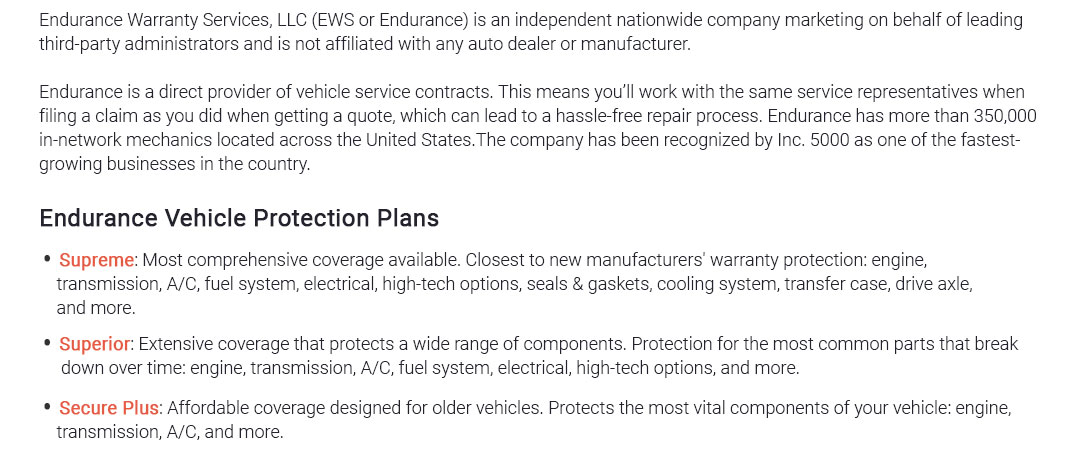
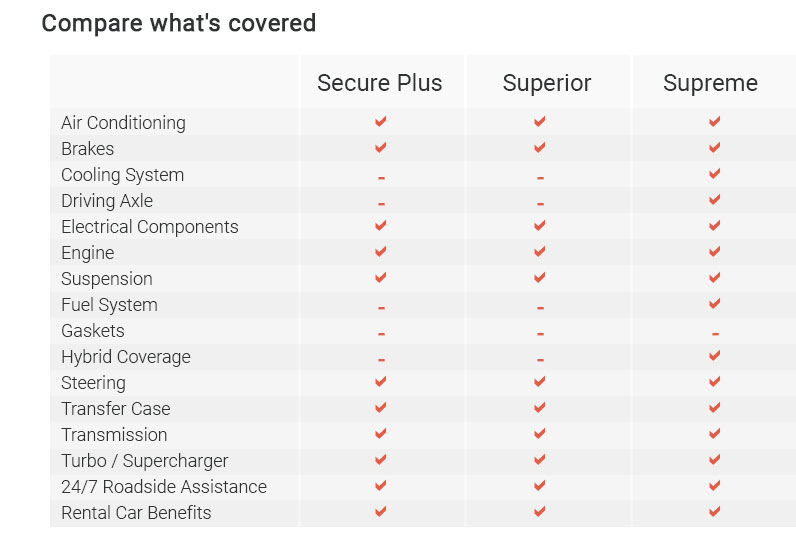
Endurance's top-tier package offers some of the most comprehensive warranty coverages on the market, and its value option still provides solid coverage. https://www.youtube.com/watch?v=FclNWQPR4bA
4 things no one is talking about when considering an aftermarket car warranty. 01:12 Reason #1 - Much Longer Wait Times For Repairs 06:29 ...
|
